
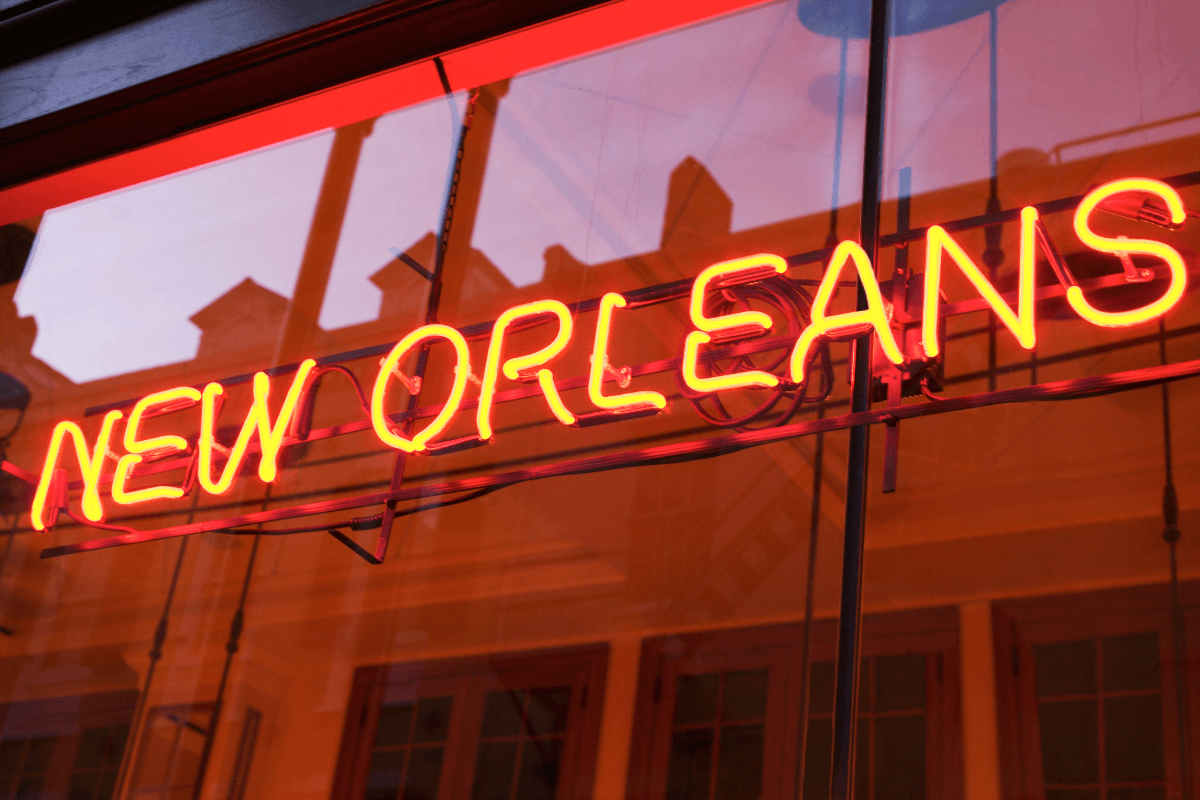
New Orleans is 1 hour and 20 minutes from Dallas by air. That proximity is deceptive — the cultural distance between the two cities is enormous. New Orleans was founded by the French in 1718, traded to Spain, sold to the United States in 1803, and built by enslaved Africans, free people of color, Creoles, Cajuns, Sicilian immigrants, and Irish laborers. Every layer left something behind in the food, the music, the architecture, and the way the city moves.
This guide covers what Dallas travelers need to know before going: flight logistics from DFW, neighborhood breakdowns, restaurant recommendations with history behind them, weather patterns, transit, and budget. No filler, no tourism-board language — just the information that helps you plan a trip worth taking.
Getting to New Orleans from Dallas
Nonstop Flights from DFW
American Airlines and Spirit Airlines both fly nonstop from DFW to Louis Armstrong New Orleans International Airport (MSY). American operates multiple daily departures on narrowbody jets. Flight time is approximately 1 hour and 20 minutes outbound and 1 hour and 35 minutes on the return. Frontier also runs nonstop DFW-MSY service, adding routes specifically for Mardi Gras season in February.
Roundtrip fares on this route typically range from $130 to $400 depending on season, with deals occasionally dropping below $100. The route is short enough that Basic Economy is perfectly tolerable — you board, the plane climbs, the drink cart comes through, and you land.
From the Airport to the City
MSY is 16 miles from the French Quarter. In light traffic, the drive takes about 20 minutes. The Airport Express bus (RTA Line 202) runs to the Central Business District in 30–40 minutes for $1.25. Taxis charge a flat rate of $36 for up to two passengers to the CBD or French Quarter ($15 per additional passenger). Rideshare apps typically run $20–$35 depending on demand.
DFW to New Orleans at a Glance
- Nonstop: American Airlines (multiple daily), Spirit, Frontier (seasonal)
- Flight time: ~1 hr 20 min outbound, ~1 hr 35 min return
- Time difference: Same time zone (Central)
- Airport to French Quarter: 16 miles, ~20 min by car, $1.25 by bus
- Typical roundtrip fare: $130–$400 (deals drop below $100)
- Best for: Long weekends through full-week trips
Understanding the Neighborhoods
New Orleans is a neighborhood city. Each district has its own architectural character, food culture, and pace. The French Quarter gets the most foot traffic, but the neighborhoods surrounding it are where many locals eat, drink, and listen to music. A quick orientation helps.
The French Quarter (Vieux Carre)
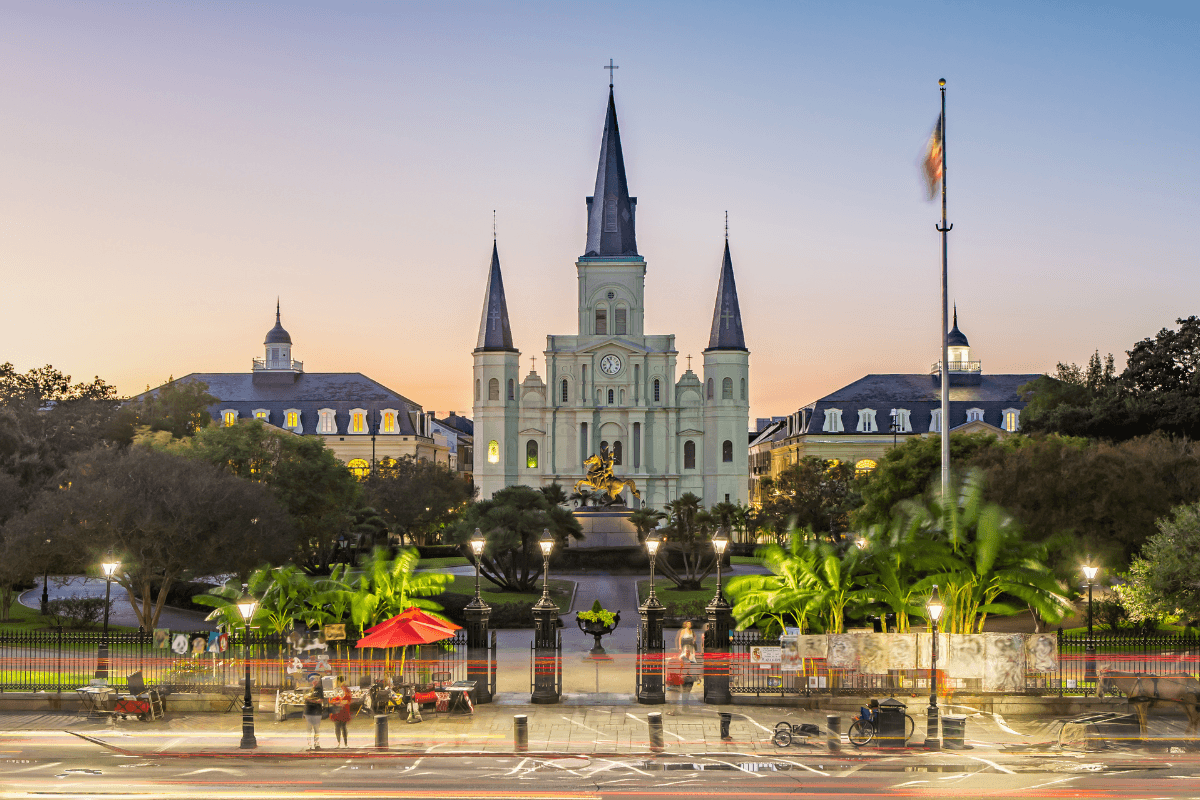
The French Quarter is roughly 13 blocks by 6 blocks — about 85 square blocks total, walkable end-to-end in 15 minutes. It was laid out by French engineers in 1721, but two fires under Spanish rule (1788 and 1794) destroyed most of the original French-era buildings. The Quarter was rebuilt in Spanish Colonial style — stucco facades, wrought-iron balconies, enclosed courtyards, flat tiled roofs. So despite the name, the architecture you see is predominantly Spanish.
Jackson Square was originally the Place d'Armes, a military parade ground. It was renamed in 1851 after Andrew Jackson, who reviewed troops there before the Battle of New Orleans in 1815. St. Louis Cathedral, facing the square, has stood in some form since 1718. The current structure dates primarily to 1850 and holds the distinction of being the oldest cathedral in continuous use in the United States. It was designated a minor basilica by Pope Paul VI in 1964.
Bourbon Street is the tourist corridor — loud, crowded, and primarily for drinking. One block over, Royal Street is the antique and gallery strip, and it is a different experience entirely. For music, skip Bourbon and walk to Frenchmen Street in the Marigny (more on that below).
Treme
Treme is the oldest African-American neighborhood in the United States, located just north of the French Quarter. Its cultural weight is difficult to overstate.
Congo Square, now part of Louis Armstrong Park, is where enslaved Africans were permitted to gather on Sundays under an 1817 city ordinance. At times, 600 people congregated there — drumming, dancing, singing, and trading goods. Those West African and Caribbean rhythmic traditions, preserved nowhere else in North America at that scale, are considered foundational to the development of jazz. The rhythms from Congo Square still echo in jazz funerals, second line parades, and Mardi Gras Indian processions.
Dooky Chase's Restaurant is on Orleans Avenue in Treme. During the 1960s, civil rights leaders including Martin Luther King Jr. met upstairs to plan protests — at a time when interracial assembly was illegal in Louisiana. More on Dooky Chase's in the food section below.
Garden District
After the Louisiana Purchase, Protestant Americans who moved to New Orleans were excluded from the Creole-dominated French Quarter. They settled upriver in a neighborhood that was originally its own incorporated city called Lafayette (annexed by New Orleans in 1852). The Garden District developed during the 1830s through 1850s cotton boom, and the architecture reflects that wealth: Greek Revival mansions with high ceilings, double galleries, cast-iron lacework, and deep gardens.
The St. Charles Streetcar runs through the district. It has been in service since 1835 — the oldest continuously operating streetcar line in the world, and a National Historic Landmark. Ride it from Canal Street through Uptown to Carrollton. Fare is $1.25.
Lafayette Cemetery No. 1, opened in 1833, sits in the Garden District with rows of above-ground tombs. New Orleans buries above ground because the water table is so high that coffins would surface after heavy rain. The city has over 40 cemeteries built this way, collectively known as the "Cities of the Dead."
Marigny and Bywater
Faubourg Marigny was created in 1806 when Bernard de Marigny, a wealthy Creole, subdivided his plantation downriver from the French Quarter. He named the streets with characteristic flamboyance: Abundance, Peace, Poets, Desire, Pleasure, Craps. The neighborhood was home to early jazz figures including Sidney Bechet and Jelly Roll Morton.
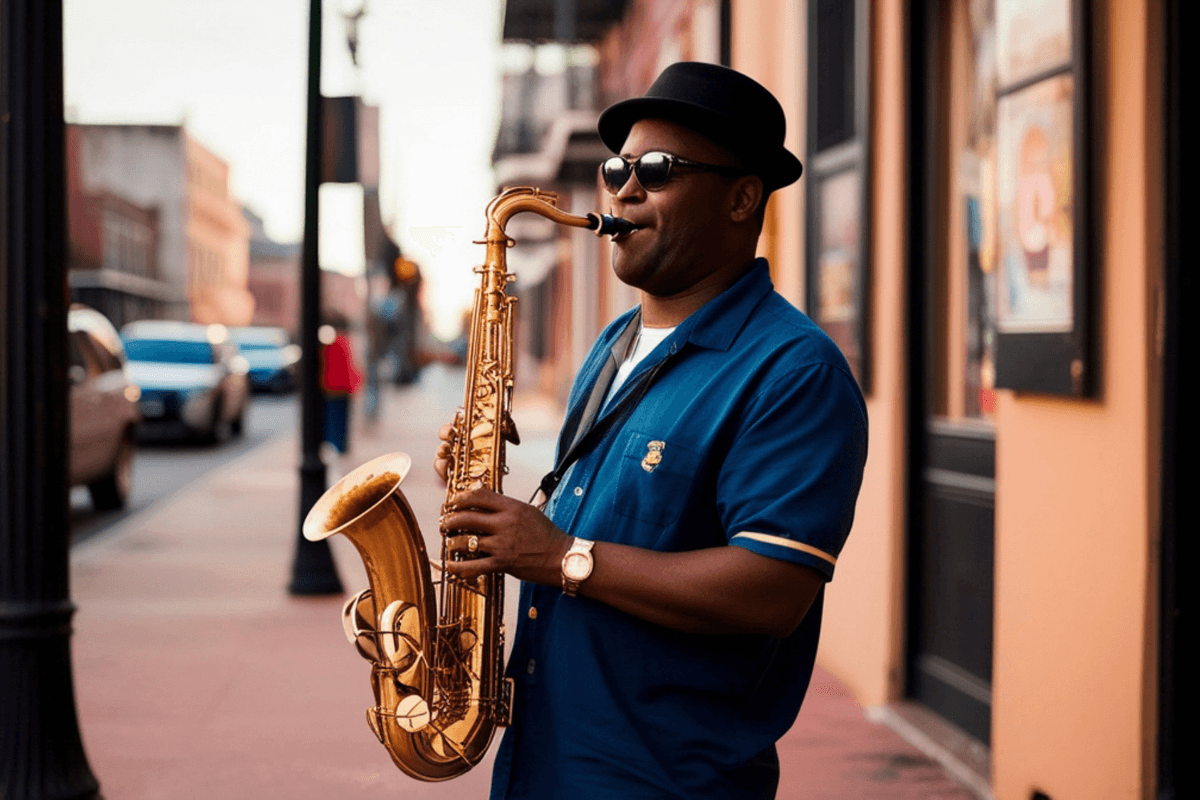
Frenchmen Street is the local live-music strip — three blocks of clubs including Snug Harbor, the Spotted Cat, Blue Nile, and the Maison. If you want to hear jazz, brass bands, funk, or soul without the Bourbon Street tourist machine, this is where you go. Most venues have no cover or a $5–$10 cover. Music starts around 9 or 10 PM and runs late.
Bywater is the next neighborhood downriver. It developed with Creole cottages and shotgun houses, drew artists and musicians for decades due to affordable rents, and has gentrified significantly since Hurricane Katrina.
What to Eat and Drink
New Orleans has one of the most distinctive food cultures in the country. It developed from the intersection of French, Spanish, West African, Caribbean, and Sicilian traditions, and many of the dishes and restaurants that define it have documented histories stretching back over a century. What follows are specific places and dishes, with the context behind them.
Iconic Dishes
Gumbo traces to the early 18th century. The name comes from a West African word for okra. It blends African (okra as thickener), French (roux), and Choctaw (file powder — dried ground sassafras leaves) techniques. Creole gumbo, associated with New Orleans, includes tomatoes and seafood. Cajun gumbo, from rural southwestern Louisiana, uses a dark roux and no tomatoes. That distinction — tomatoes or no tomatoes — is the dividing line.
Po'boys date to the 1929 New Orleans streetcar strike. Bennie and Clovis Martin, former streetcar conductors who had opened a restaurant in the French Market, fed striking workers free sandwiches on long French bread loaves. They called each arriving striker "another poor boy." The sandwich kept the name. The Martin brothers worked with baker John Gendusa to develop a specific 40-inch loaf for the purpose. Order one "dressed" (lettuce, tomato, pickles, mayo) or undressed. Classic fillings: roast beef with gravy, fried shrimp, fried oyster.
Muffulettas were created in 1906 at Central Grocery on Decatur Street by Salvatore Lupo, a Sicilian immigrant. He combined muffuletta bread, cold cuts, cheese, and olive salad into one sandwich for workers who had been buying the ingredients separately. The store is still family-operated and reopened in December 2024 after Hurricane Ida rebuilding.
Red beans and rice on Monday is still a tradition at restaurants across the city. Monday was historically laundry day — the beans could simmer unattended while women scrubbed clothes. The Sunday hambone went into the pot for flavor.
Beignets at Cafe du Monde are the standard first stop for most visitors. The cafe opened in 1862 in the French Market. Beignets come in orders of three, covered in powdered sugar, with cafe au lait made with chicory coffee. Current hours are Monday through Thursday 7:15 AM to 11 PM, Friday and Saturday until midnight, Sunday until 11 PM. It closes only on Christmas Day and for hurricanes.
Restaurants Worth Planning Around
Commander's Palace (1403 Washington Ave, Garden District) has been open since 1893. The Brennan family acquired it in 1969. It has won seven James Beard Awards — more than any other restaurant in the country. Paul Prudhomme and Emeril Lagasse both came through its kitchen. The Sunday jazz brunch includes a brass trio that goes table to table. The 25-cent martini lunch deal runs Wednesday, Thursday, and Friday with an entree purchase.
Dooky Chase's (Treme) started as a sandwich shop in 1939. Leah Chase, who married into the family in 1946, transformed it into a sit-down Creole restaurant. She served Thurgood Marshall, Ray Charles, Duke Ellington, and Presidents Bush and Obama. She received the James Beard Lifetime Achievement Award in 2016 and died in 2019 at 96. The restaurant continues under her family.
Peche Seafood Grill (800 Magazine St, Warehouse District) opened in 2013 and won the James Beard Award for Best New Restaurant in 2014 — the first New Orleans restaurant to win that category. Chef Ryan Prewitt runs the kitchen with a wood-burning grill and a Gulf seafood focus.
Turkey and the Wolf (Irish Channel) opened in 2016 as a lunch-focused sandwich shop. Bon Appetit named it Best New Restaurant in America in 2017. It earned a Michelin Bib Gourmand in the 2025 Michelin Guide. Chef Mason Hereford makes inventive, over-the-top sandwiches. Expect a line.
Willie Mae's Scotch House started in Treme in 1957 as a barbershop, beauty salon, and bar before becoming a full-time restaurant. It won the James Beard America's Classic award in 2005 for what Food Network called "America's best fried chicken." A fire damaged the original location in April 2023. A new location opened downtown in November 2024.
Parkway Bakery and Tavern (538 Hagan Ave, Mid-City) has been serving po'boys since 1911 and has a direct connection to the 1929 streetcar strike. Henry Timothy Sr. purchased the bakery in 1922 and fed striking workers free French fry po'boys in 1929. After closing in 1993, it reopened under new ownership and now serves about 1,000 people per day.
Cocktail History
The Sazerac is the city's official cocktail, designated by the Louisiana Legislature in 2008. It originated with Antoine Amedee Peychaud, a Creole apothecary who sold bitters at his shop on Royal Street in the 1830s. The drink was originally made with cognac, switched to rye whiskey around 1870 after the phylloxera epidemic destroyed French vineyards, and gained an absinthe rinse in 1873. Drink one at the Sazerac Bar in the Roosevelt Hotel, which features mahogany walls, Paul Ninas murals, and a history that includes Governor Huey Long using the hotel as his Louisiana headquarters in the 1930s.
The Hurricane was created at Pat O'Brien's in the 1940s. During World War II, domestic whiskey was scarce because distilleries had been repurposed for war production. Caribbean rum flowed up the Mississippi in surplus. Pat O'Brien and his partners developed a rum punch recipe to move inventory. The drink was served in a glass shaped like a hurricane lamp, and the name stuck.
The Ramos Gin Fizz was created in 1888 by Henry Ramos at the Imperial Cabinet Saloon. He added cream and orange flower water to a standard fizz. The drink requires so much shaking that Ramos employed at least 20 bartenders dedicated solely to the task. At the 1915 Mardi Gras, 35 shaker boys could not keep up with demand.
Music and Cultural Traditions
Jazz Originated Here
Buddy Bolden, born in New Orleans in 1877, is widely regarded as the first musician to play what became known as jazz. He played cornet and rearranged the New Orleans dance band format so that improvisation could lead. His innovation — the "Big Four" rhythmic pattern — broke from the rigid marching band beat and created space for individual expression. His band peaked from 1900 to 1907. No recordings of Bolden survive.
Louis Armstrong was born in New Orleans in 1901 and grew up in a neighborhood called "The Battlefield." He learned cornet at the Colored Waif's Home for Boys after a New Year's Eve arrest in 1912. His mentor, Joe "King" Oliver, was the city's top cornetist. Armstrong absorbed early jazz at second line parades, funeral processions, and community gatherings from childhood.
Preservation Hall at 726 St. Peter Street in the French Quarter has been operating since 1961. Allan and Sandra Jaffe started it during their honeymoon in 1960, taking over informal jazz sessions at an art gallery. It was a racially integrated performance space in the Jim Crow South. The Preservation Hall Jazz Band, organized in 1963, still tours. The hall is now run by the Jaffes' son Benjamin.
Second Line Parades and Jazz Funerals
A second line parade is a foot parade led by a brass band. The "first line" is the band and whoever is being honored. The "second line" is everyone who falls in behind — the dancers, the strutters, the crowd. It has been called "the quintessential New Orleans art form — a jazz funeral without a body."
In a jazz funeral, the band plays dirges on the way to the burial. After the burial, they switch to upbeat, celebratory music and the second line dances through the streets. Second lines originated in the African-American community through social aid organizations that pooled funds for burial insurance. Today they happen year-round — for weddings, birthdays, memorials, and neighborhood celebrations. Sunday afternoons in the French Quarter and Treme are the most common times.
Mardi Gras and the Krewe System
Mardi Gras ("Fat Tuesday") is the day before Ash Wednesday. In 2026, it falls on February 17. Carnival season starts January 6 (Twelfth Night) and builds through two weeks of parades.
The first organized Mardi Gras parade was staged by the Mistick Krewe of Comus on February 24, 1857, starting from Magazine and Julia Streets. Comus introduced torch-lit processions, thematic floats, and the word "krewe." The Krewe of Rex launched the first daytime parade in 1872 and introduced Carnival's official colors — purple (justice), gold (power), green (faith) — in honor of visiting Russian Grand Duke Alexis Romanoff.
The Zulu Social Aid & Pleasure Club, founded in 1916, is the city's largest predominantly African-American carnival organization. Members wear grass skirts and the krewe's signature throw is the hand-painted coconut — the first signature throw in Mardi Gras history.
There is no central coordinator of Mardi Gras. Each krewe is autonomous. Membership ranges from exclusive old-line societies to open organizations. If you visit during Carnival, the parade schedule is published well in advance — plan your days around which routes interest you.
When to Go
Weather by Season
New Orleans receives about 63 inches of rain annually and humidity holds steady at 72 to 77% year-round. Summers are hot. This matters for planning.
October through November: Highs 71 to 80°F, lows 52 to 62°F. The driest months, past hurricane season's peak, and the most comfortable walking weather. Hotel prices are lower. This is when locals will tell you to visit.
February through April: Highs 66 to 79°F, lows 47 to 60°F. Mardi Gras (February), French Quarter Festival (April 16 to 19, 2026), and Jazz Fest (April 23 to May 3, 2026) all fall in this window. Expect higher hotel prices and crowds during events, moderate weather with occasional rain.
June through August: Highs 90 to 91°F, lows 74 to 76°F. The wettest months (6+ inches per month). The heat is relentless and the humidity makes it feel worse. If you come from Dallas, you know summer heat — but New Orleans summer is wetter and more oppressive than anything in North Texas. Plan for frequent stops in air conditioning.
December through January: Highs 62 to 63°F, lows 43 to 45°F. Cool enough for a jacket, warm enough to walk the city comfortably. Fewer tourists. Holiday events and decorations throughout the Quarter.
Hurricane season runs June 1 through November 30, with peak activity mid-August through October. Check forecasts before booking summer or early fall trips.
Major Festivals and Events in 2026
- Mardi Gras: February 17, 2026 (Carnival season starts January 6)
- French Quarter Festival: April 16 to 19, 2026 (free, largest celebration of Louisiana music and food)
- Jazz Fest: April 23 to 26 and April 30 to May 3, 2026 at Fair Grounds Race Course
- Essence Festival: July 3 to 5, 2026 at Caesars Superdome
- Bocuse d'Or Americas Selection: July 26, 2026 at the Convention Center
Practical Information
Budget
A budget traveler spending on hostels, casual food, and public transit can manage roughly $120 per day. Mid-range travelers — hotel, sit-down restaurants, a few paid attractions — should plan for $200 to $270 per day. Meal costs: breakfast $8 to $15, lunch (po'boy or casual) $10 to $20, sit-down dinner $15 to $40+. Beignets at Cafe du Monde run under $10.
Attraction prices vary. The National WWII Museum charges $26 to $36 for general admission (veterans and one companion are free; active military gets $10 off). Audubon Zoo runs $45 to $55 adult. Walking tours of the Garden District range from free (self-guided) to $15 to $25 per person (guided).
Getting Around
You do not need a car for the French Quarter, Marigny, CBD, Warehouse District, or Garden District. Walking, streetcars, buses, and rideshare cover these areas completely.
RTA fares: Single ride $1.25. Transfer $0.25 (good for 2 hours). Jazzy Pass: 1-day $3, 3-day $9, 5-day $15. Payment by exact cash, Jazzy Pass card, or the Le Pass mobile app. The St. Charles Streetcar (service since 1835) and the Canal Street Streetcar both use the same fare system.
A car becomes useful for trips outside the core tourist areas — swamp tours, plantation visits, or drives into Cajun country.
Safety
New Orleans ended 2025 with its lowest homicide rate in 50 years. From 2022 to 2025, homicides dropped 55%, armed robberies dropped 59%, and carjackings dropped 70%. Tourist districts — the French Quarter, CBD, Warehouse District, and Garden District — benefit from regular police patrols and high pedestrian traffic. Most crime in tourist areas is non-violent and opportunistic. Standard urban precautions apply: stay in well-lit, populated areas at night, keep valuables secure.
Local Terms Worth Knowing
- Lagniappe (lan-YAP): "A little something extra" — a bonus or freebie
- Neutral Ground: A median. Named after Canal Street's median, which separated the French and American sectors
- Parish: Louisiana's equivalent of a county (from the Catholic parish system under French and Spanish rule)
- Where Y'at: A greeting meaning "How are you?" — source of the local "Yat" dialect term
- Dressed: When ordering a po'boy, "dressed" means lettuce, tomato, pickles, and mayo
- Making groceries: Going grocery shopping — from the French "faire son marche"
How Long to Stay
Long Weekend: 3 to 4 Nights
The short flight from DFW makes New Orleans a strong long-weekend destination. Three to four nights is enough to cover the French Quarter, eat well, hear live music on Frenchmen Street, walk the Garden District, and visit one major museum or attraction. A realistic schedule:
- Day 1: Arrive, walk the French Quarter, beignets at Cafe du Monde, dinner in the Warehouse District
- Day 2: Garden District walking tour, Commander's Palace lunch, St. Louis Cemetery No. 1, Frenchmen Street at night
- Day 3: National WWII Museum, po'boys at Parkway, Treme and Congo Square, live jazz at Preservation Hall
- Day 4: Morning at the French Market, Central Grocery muffuletta, departure
Full Week: 5 to 7 Nights
A longer stay lets you slow down and explore beyond the standard tourist routes. Add the Bywater for galleries and neighborhood restaurants. Take the Algiers Point ferry across the Mississippi (free for pedestrians). Visit the Audubon Zoo by streetcar. Book a swamp tour ($25 to $65, about an hour outside the city). Drive to plantation country along the River Road for Oak Alley or Whitney Plantation, which focuses specifically on the lives of the enslaved people who worked there.
With five or more days, you can also time your meals more deliberately — getting a reservation at Commander's Palace for Sunday jazz brunch, trying Cochon for Cajun pork dishes, eating fried chicken at Willie Mae's without rushing, and leaving room for the unexpected corner restaurant a local recommends.
Get Flight Deal Alerts from Dallas to New Orleans
We track DFW-MSY fares daily and publish them to our deal pages, refreshed hourly. Premium subscribers get the live deals dashboard with real-time fare drops and unlimited custom trip alerts by city, dates, and savings threshold.
Frequently Asked Questions
Sources: American Airlines route data (aa.com), Louis Armstrong New Orleans International Airport (flymsy.com), New Orleans Regional Transit Authority (norta.com), New Orleans and Company tourism data (neworleans.com), 64 Parishes Louisiana encyclopedia (64parishes.org), NOLA.com, Historic New Orleans Collection (hnoc.org), James Beard Foundation (jamesbeard.org), National WWII Museum (nationalww2museum.org), Weather Spark New Orleans climate data, New Orleans Police Department crime statistics.
Get Flight Deal Alerts from DFW & DAL
Free subscribers get our twice-weekly deal newsletter and every deal page on the site, refreshed hourly. Premium adds the live deals dashboard updating in real time and unlimited custom trip alerts by city, dates, and savings threshold.

Read Next
Planning a Trip to Miami from Dallas: What to Know Before You Go
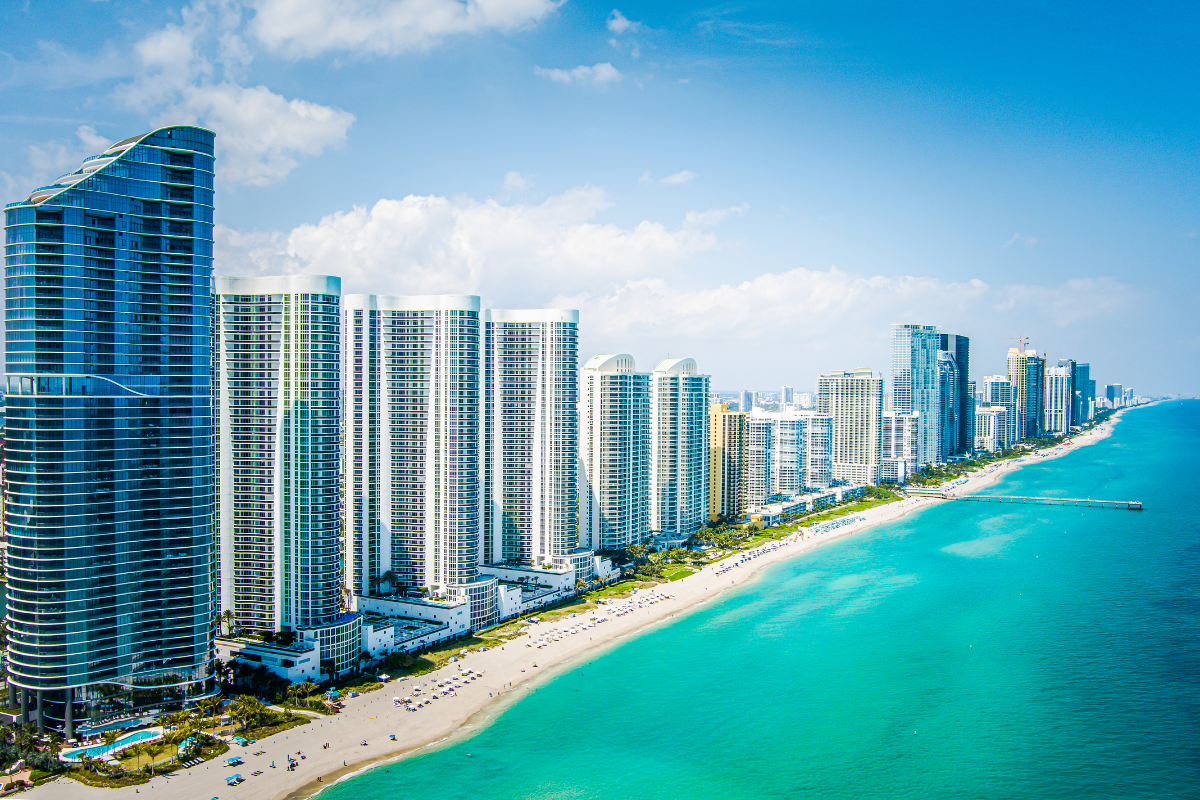
A practical guide for Dallas travelers considering Miami. Nonstop flight details from DFW, neighborhood breakdowns from South Beach to Little Havana, restaurant recommendations from Joe's Stone Crab to Michelin-starred Boia De, Cuban coffee culture, Art Basel and Calle Ocho, weather and hurricane realities, and honest advice on when to go and how long to stay.
Planning a Trip to Amsterdam from Dallas: What to Know Before You Go
A practical guide for Dallas travelers considering Amsterdam. Nonstop flight details from DFW, seasonal weather breakdown, arrival logistics at Schiphol, day trip options by train, and honest advice on how long to stay and when to go.