
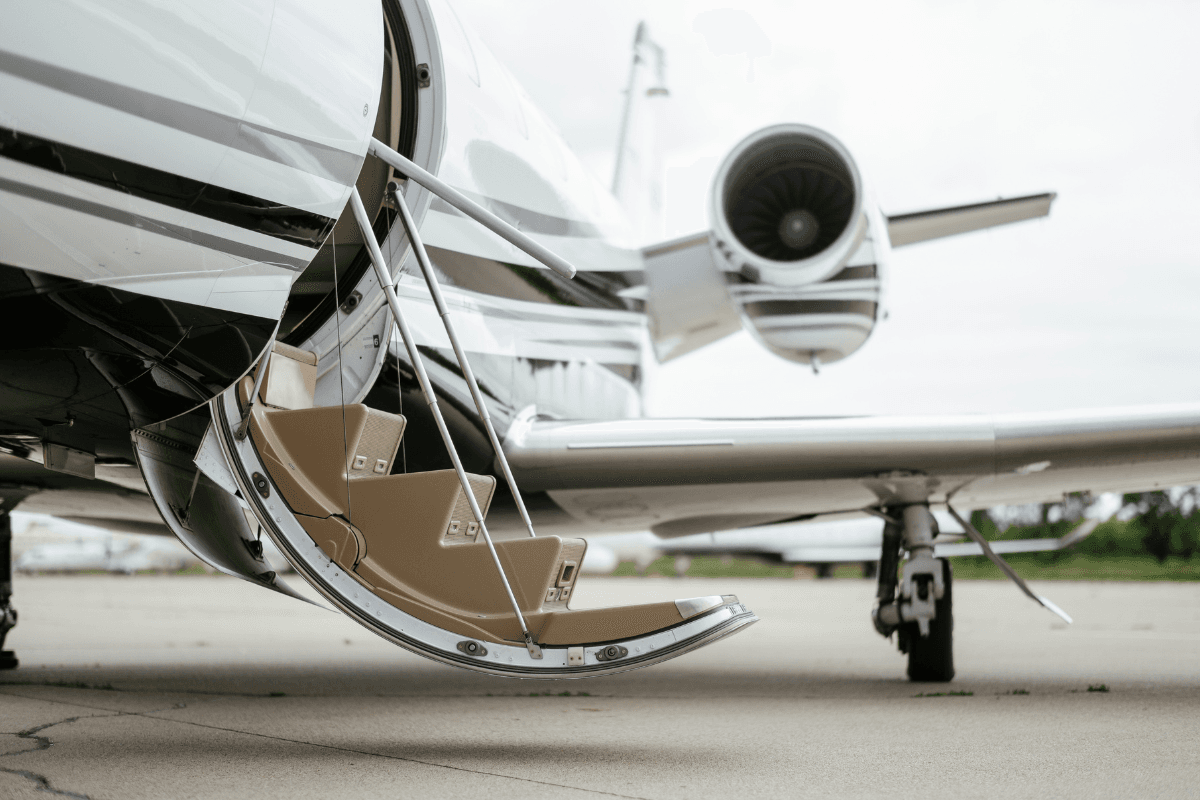
"Flying private" conjures images of Gulfstreams, celebrity entourages, and six-figure annual memberships. For most Dallas travelers, that world feels irrelevant—until you realize there's a middle ground that delivers much of what makes private aviation appealing without the charter-level cost.
JSX operates from Dallas Love Field and offers something genuinely different: 30-seat jets departing from private terminals, with no TSA lines, 20-minute arrival windows, and legroom that matches domestic first class. It's not a private jet. But for certain trips from Dallas, it might be the closest practical alternative—and this guide explains when it makes sense, when it doesn't, and what the experience actually delivers.
TL;DR: JSX From Dallas at a Glance
What JSX Is: A semi-private airline operating 30-seat Embraer jets from private terminals. You buy individual seats, not the whole plane—but the experience feels closer to private aviation than commercial flying.
Where It Flies From Dallas: Dallas Love Field (DAL), not DFW. Destinations include Las Vegas, Cabo San Lucas, Miami, Houston, Westchester County (NYC area), Orange County, Burbank, Denver, and multiple seasonal routes to ski towns, Texas destinations, and Florida beaches.
The Time Savings: Arrive 20 minutes before departure. No TSA lines. Walk from your car to the lounge to the plane in minutes. This is where JSX delivers real value.
The Comfort Level: 36 inches of legroom (first-class equivalent), 1-2 seat configuration, leather seats, free checked bags, complimentary drinks including alcohol, and Starlink WiFi.
Who It's Best For: Travelers who value time over cost, business travelers on tight schedules, families who hate airport chaos, and anyone flying routes JSX actually serves from Dallas.
What People Mean When They Say "Flying Private"
Time Savings vs. Luxury
When most people fantasize about flying private, they're not actually dreaming about champagne and caviar. They're dreaming about skipping the line at TSA. They're imagining walking into an airport 15 minutes before departure instead of 90. They're picturing a world where "getting to the airport early" doesn't exist.
The luxury aspects of private aviation—the plush interiors, the personalized service, the ability to fly whenever you want—are nice. But the core appeal is simpler: reclaiming time that commercial aviation wastes. The security theater, the boarding zones, the gate changes, the overhead bin fights. Private aviation eliminates all of it.
This distinction matters because it reveals what most travelers actually need. You don't need a Gulfstream to avoid TSA. You don't need to charter an entire aircraft to board without stress. You need an alternative that preserves the time-saving elements without the astronomical cost.
Why Most People Don't Actually Need a Charter
True private charter—renting an entire aircraft for your exclusive use—starts around $5,000 to $10,000 per flight hour. A round-trip from Dallas to Colorado on a light jet can easily run $15,000 to $25,000. For a family of four, that's roughly $4,000 to $6,000 per person for a weekend ski trip.
Charter makes sense for groups traveling together on custom itineraries, executives on time-critical trips, or situations where commercial options simply don't exist. But for a Dallas family heading to Destin, or a couple flying to Santa Fe for a long weekend, full charter is overkill.
The question becomes: is there something between commercial economy and chartering a whole plane? That's exactly the gap JSX occupies.
Meet JSX: The Middle Ground Between Airlines and Private Jets
What JSX Is (and What It Isn't)
JSX is a semi-private airline that sells individual seats on 30-passenger Embraer jets. You're sharing the plane with other travelers—up to 29 of them—but you're departing from private terminals, skipping TSA, and flying on aircraft configured for comfort rather than maximum capacity.
JSX Is:
- A way to fly from private terminals without chartering a whole plane
- Significantly more comfortable than commercial economy
- Faster door-to-door than equivalent commercial flights
- Priced between economy and first class (sometimes comparable to first class)
JSX Is Not:
- A private jet (you're sharing with other passengers)
- Available on every route (limited network from Dallas)
- Always cheaper than commercial first class
- A replacement for airlines on routes JSX doesn't fly
The distinction is important. JSX won't fly you to major international destinations like London or Tokyo. But on routes it does serve—Las Vegas, Miami, Cabo, ski destinations in Colorado, and even Westchester County for NYC access—it offers something commercial airlines can't match: a genuinely pleasant airport experience.
How JSX Keeps Costs Lower Than Charter Flights
JSX operates as what's called a "public charter" under FAA Part 380 regulations. In practice, this means they charter aircraft from their own subsidiary and sell seats to the public. This regulatory structure is what allows them to use private FBO terminals instead of commercial airport gates—and to skip traditional TSA screening.
Because they're selling 30 seats per flight instead of chartering to one customer, they can spread the operating cost across multiple passengers. A flight that might cost $8,000 to charter becomes $250 to $500 per seat when shared among 30 people.
The trade-off is flexibility. JSX flies scheduled routes at scheduled times. You can't call them at 3 PM and depart at 5 PM like you could with a true charter. But for travelers who can plan around their schedule, the economics work.
What Flying JSX Actually Feels Like
The Airport Experience (Arrival, Security, Boarding)
This is where JSX delivers its clearest value. Instead of arriving 90 minutes early to navigate check-in kiosks, bag drop lines, and TSA queues, you show up 20 minutes before departure at a private terminal.
The JSX Departure Timeline:
Arrival (T-20 minutes): Park in the dedicated lot or get dropped off at the private terminal entrance. Walk inside—no terminal maze, no signage confusion.
Check-In (T-15 minutes): Show your ID at a small counter. Your bags are tagged and taken. The whole process takes 2-3 minutes.
Security (T-12 minutes): Walk through a weapons detector and have your bag swabbed for explosives. No removing shoes, no liquid restrictions drama, no bins. Takes about 60 seconds.
Lounge (T-10 minutes): Wait in a quiet lounge with complimentary coffee, snacks, and drinks. When boarding begins, you walk directly to the aircraft on the tarmac.
Boarding (T-5 minutes): No boarding zones, no gate-checking bags, no overhead bin competition. Find your seat, sit down, and you're ready.
What about security? JSX doesn't use TSA screeners, but they're not flying with zero security either. All passengers are checked against federal no-fly lists. Bags are swabbed for explosives. Everyone passes through a weapons detection system. It's security designed to be effective without being theatrical.
Cabin Size, Seats, and Comfort
Seat Configuration: JSX flies Embraer ERJ-135 and ERJ-145 jets configured with 30 seats instead of the standard 37. Most rows are arranged 1-2 (one seat on one side, two on the other), meaning no middle seats and easy aisle access.
Legroom: Approximately 36 inches of pitch—comparable to domestic first class on most airlines. You can cross your legs. The person in front of you can recline without crushing your laptop.
Baggage: Two free checked bags per passenger. Carry-ons stow in dedicated compartments. No fighting for overhead space, no gate-checking your roller bag because bins are full.
Amenities: Leather seats, power outlets at every seat, Starlink WiFi, and complimentary snacks and beverages—including beer and wine. Full flight attendant service on every flight.
The planes are smaller than what you'd fly on American or Southwest, which means quicker boarding, faster deplaning, and less time waiting for your checked bags (they come out almost immediately after landing).
Who You're Flying With
This isn't a party plane or a celebrity-filled cabin. JSX passengers tend to be business travelers on tight schedules, families escaping the commercial airport chaos, couples heading to resort destinations, and ski/golf trip groups who value convenience over cost.
The vibe is quiet and professional. People are reading, working on laptops, or just enjoying the absence of screaming boarding announcements. It's not dramatically different from a commercial first-class cabin—just with better airport logistics attached.
Track flight deals from Dallas?
We monitor prices on 100+ routes from DFW and Love Field — including destinations JSX serves. Free subscribers get our twice-weekly deal newsletter and every deal page on the site. Premium adds the live deals dashboard with real-time fare drops and unlimited custom trip alerts by city, dates, and savings.
Subscribe for Free
JSX Flights From Dallas
Where You Depart From in Dallas
JSX operates exclusively from Dallas Love Field (DAL), not DFW. This is important: if you're used to flying American out of DFW, you'll need to navigate to a different airport entirely.
At Love Field, JSX uses a private FBO (fixed-base operator) terminal—separate from the main Southwest-dominated terminal. You'll park in a dedicated lot or be dropped off at a distinct entrance. The experience is closer to arriving at a small executive airport than a major commercial terminal.
Dallas Love Field JSX Terminal: JSX operates from a private terminal at Love Field. Check your booking confirmation for the specific address and parking instructions—it's not the main terminal entrance. Arrive 20 minutes before departure, not the 90 minutes you'd budget for Southwest.
Nonstop Routes You Can Actually Fly
JSX's route network from Dallas covers major leisure destinations, business markets, and resort towns. The common thread: routes where the semi-private experience adds clear value over commercial alternatives.
Major Destinations:
- Las Vegas, Nevada
- Cabo San Lucas, Mexico
- Miami, Florida (Opa-locka Executive)
- Westchester County, NY (NYC area)
- Houston, Texas
- Denver, Colorado
- Orange County, California
- Burbank, California
Seasonal & Regional:
- Destin, Florida
- Gunnison, Colorado (ski season)
- Santa Fe, New Mexico
- Taos, New Mexico
- Hobbs, New Mexico
Routes and schedules change seasonally. Always verify current availability on JSX's website before planning.
The strategic mix: JSX balances high-demand leisure routes (Vegas, Cabo, Miami) with California access (Burbank, Orange County), East Coast connectivity (Westchester for NYC), and resort destinations (ski towns, Destin). For Dallas travelers, this means JSX is genuinely useful for a range of trip types—not just niche getaways.
Typical Flight Lengths
Most JSX routes from Dallas are relatively short—typically 1 to 2.5 hours in the air. This is intentional. On short flights, the time savings at the airport represent a significant percentage of total travel time. Arriving 20 minutes early instead of 90 minutes early matters more on a 90-minute flight than on a 6-hour transatlantic crossing.
Sample flight times: Dallas to Las Vegas is about 2.5 hours. Dallas to Miami is about 2.5 hours. Dallas to Cabo is about 3 hours.
How JSX Compares to Commercial First Class
Time Door-to-Door
This is where JSX wins decisively. Compare a typical Dallas to Las Vegas trip:
Commercial (Southwest/Spirit):
- Arrive early: 90 minutes
- Check-in/security: 20-45 minutes
- Boarding/taxi: 30-40 minutes
- Flight time: ~2.5 hours
- Deplaning/bags: 20-30 minutes
- Total: 5-6 hours door-to-door
JSX:
- Arrive early: 20 minutes
- Check-in/security: 5 minutes
- Boarding/taxi: 10 minutes
- Flight time: ~2.5 hours
- Deplaning/bags: 10 minutes
- Total: 3.5-4 hours door-to-door
The flight time is identical. But JSX saves 1.5 to 2 hours on the ground—time that commercial travelers spend waiting in lines, sitting at gates, and watching their bags circle carousels.
Comfort and Space
Onboard comfort is roughly comparable to domestic first class. JSX's 36 inches of legroom matches or exceeds what you'd get in American's domestic first class. The 1-2 seat configuration means no middle seats and easier aisle access than a 2-2 first-class cabin.
Where JSX falls slightly short: the planes are smaller regional jets, which means smaller lavatories, less overhead bin space (though this rarely matters with free checked bags), and more turbulence sensitivity than larger aircraft. If you're choosing based purely on seat comfort and ignoring everything else, first class on a larger aircraft might feel marginally more premium.
But most travelers aren't choosing based purely on seat comfort. They're choosing based on the entire experience—and JSX's ground experience is dramatically better.
Stress Level
This is subjective but real. Commercial flying—even in first class—involves uncertainty. Will the TSA line be 10 minutes or 45? Will my connection be delayed? Will there be overhead bin space? Will the person next to me be having a loud phone conversation?
JSX eliminates most of these variables. You know exactly how long the process takes. You know there's no connection to miss. You know the cabin will be quiet and half-empty. For travelers who find airport stress genuinely unpleasant (rather than just mildly annoying), this predictability has real value.
When JSX Is Worth It From Dallas
Ideal Trip Lengths
JSX makes the most sense for short to medium trips where airport time represents a significant portion of total travel time:
- Weekend getaways: When you're only gone 2-3 days, saving 3-4 hours on airport logistics means significantly more time at your destination.
- Long weekends: Thursday-to-Sunday trips to Destin or Santa Fe where every hour counts.
- Ski trips: When you're paying for lift tickets and lodging by the day, arriving 2 hours earlier means more runs.
- Day trips: If you need to be in Santa Fe for a meeting and back to Dallas the same evening, JSX makes it feasible.
For longer vacations (10+ days), the time savings matter less as a percentage of total trip time. You might still prefer JSX for the experience, but the economic case is weaker.
Best Traveler Profiles
JSX Makes Sense For:
- Time-constrained business travelers: When your time is worth more than the fare premium.
- Families with young children: Shorter airport waits, calmer environment, no fighting crowds.
- Travelers who hate airports: If TSA lines genuinely stress you out, JSX eliminates that entirely.
- Ski and golf groups: When everyone's meeting at the destination anyway and the gear is easier to handle.
- Couples on special occasions: Anniversary trips where the experience matters, not just the destination.
JSX Might Not Fit If:
- Budget is the priority: Commercial economy will almost always be cheaper.
- You need routes JSX doesn't fly: No amount of convenience helps if they don't go where you need.
- You have status with airlines: If you're getting upgrades and lounge access anyway, the gap narrows.
- You actually like airports: Some people enjoy the ritual. JSX isn't for them.
When JSX Isn't the Right Move
Routes Where Airlines Win
JSX covers a lot of ground from Dallas, but there are still gaps. If you're flying from Dallas to:
- Most East Coast cities: JSX serves Westchester County (convenient for NYC), but Boston, Washington D.C., and Philadelphia require commercial carriers.
- International destinations beyond Mexico: JSX flies to Cabo, but for Europe, Asia, or the Caribbean, you need traditional airlines.
- Northern California and Pacific Northwest: No direct service to San Francisco, Seattle, or Portland. JSX's California coverage is Southern California only (Orange County, Burbank).
For routes JSX does serve—like Vegas, Miami, or Houston—the question becomes whether the time savings justify the fare difference. On high-frequency routes where Southwest offers 10+ daily departures, the flexibility of commercial schedules may outweigh JSX's experience advantages.
Trips You Should Just Drive
For some destinations from Dallas, driving beats flying entirely—regardless of whether you're flying commercial or JSX:
- Austin (3 hours): By the time you factor in airport logistics on both ends, driving is competitive or faster—and you have a car when you arrive.
- Houston (4 hours): Same logic. Unless you have meetings immediately upon arrival, driving makes sense.
- Oklahoma City (3.5 hours): Another drive-beats-fly scenario for most travelers.
- San Antonio (4.5 hours): Borderline, but driving is often simpler, especially with luggage or groups.
JSX doesn't serve these routes from Dallas anyway, but the broader point matters: not every trip needs to involve an airplane. For destinations within 4-5 hours of Dallas, the car is often the better tool.
The Bottom Line: Is This "Flying Private" or Just Smarter Flying?
JSX isn't flying private in the traditional sense. You're sharing a 30-seat jet with other passengers, flying scheduled routes at scheduled times, and paying prices that—while higher than economy—aren't in true charter territory.
What JSX does offer is the experience of private aviation where it matters most: the airport. The 20-minute arrival window, the absence of TSA theater, the calm boarding process, the immediate bag retrieval. These aren't luxury perks—they're time-saving improvements that make travel less exhausting.
For Dallas travelers heading to destinations JSX actually serves—Santa Fe for a weekend, Destin for a beach trip, Colorado for ski season—it's worth considering. The routes are limited, but where they exist, JSX delivers something commercial airlines can't easily match.
The honest takeaway: JSX is a useful tool for specific trips, not a replacement for commercial aviation. Know what routes it serves, understand when the time savings justify the cost, and use it strategically. That's smarter flying—even if it's not technically flying private.
Disclaimer: DFW CheapFlights is not sponsored by, associated with, or affiliated with JSX, Embraer, or any other brands mentioned in this article. Routes, schedules, and policies are subject to change. Always verify current information on JSX's official website before booking. All information is provided for informational purposes only based on publicly available sources.
Looking for flight deals from Dallas?
We track prices on 100+ routes from DFW and Love Field daily. Get alerts when fares drop to destinations you care about—whether you're flying commercial, JSX, or just comparing options.
Get Flight Deal Alerts from DFW & DAL
Free subscribers get our twice-weekly deal newsletter and every deal page on the site, refreshed hourly. Premium adds the live deals dashboard updating in real time and unlimited custom trip alerts by city, dates, and savings threshold.
Read Next
Planning a Trip to Miami from Dallas: What to Know Before You Go
A practical guide for Dallas travelers considering Miami. Nonstop flight details from DFW, neighborhood breakdowns from South Beach to Little Havana, restaurant recommendations from Joe's Stone Crab to Michelin-starred Boia De, Cuban coffee culture, Art Basel and Calle Ocho, weather and hurricane realities, and honest advice on when to go and how long to stay.
Planning a Trip to New Orleans from Dallas: What to Know Before You Go
A practical guide for Dallas travelers considering New Orleans. Nonstop flight details from DFW, neighborhood breakdowns from the French Quarter to Bywater, restaurant history from Commander's Palace to po'boy origins, cocktail culture, Mardi Gras logistics, and honest advice on when to go and how long to stay.